Natural Wonders Around Måløy and Vågsøy
The island of Vågsøy and the coast around Måløy pack an unusual amount of raw Atlantic scenery into a small area, from a wind-sculpted rock to Europe's highest sea cliff. For cruise and independent travellers, most of it sits within an easy drive of the quay.
Where sea meets rock
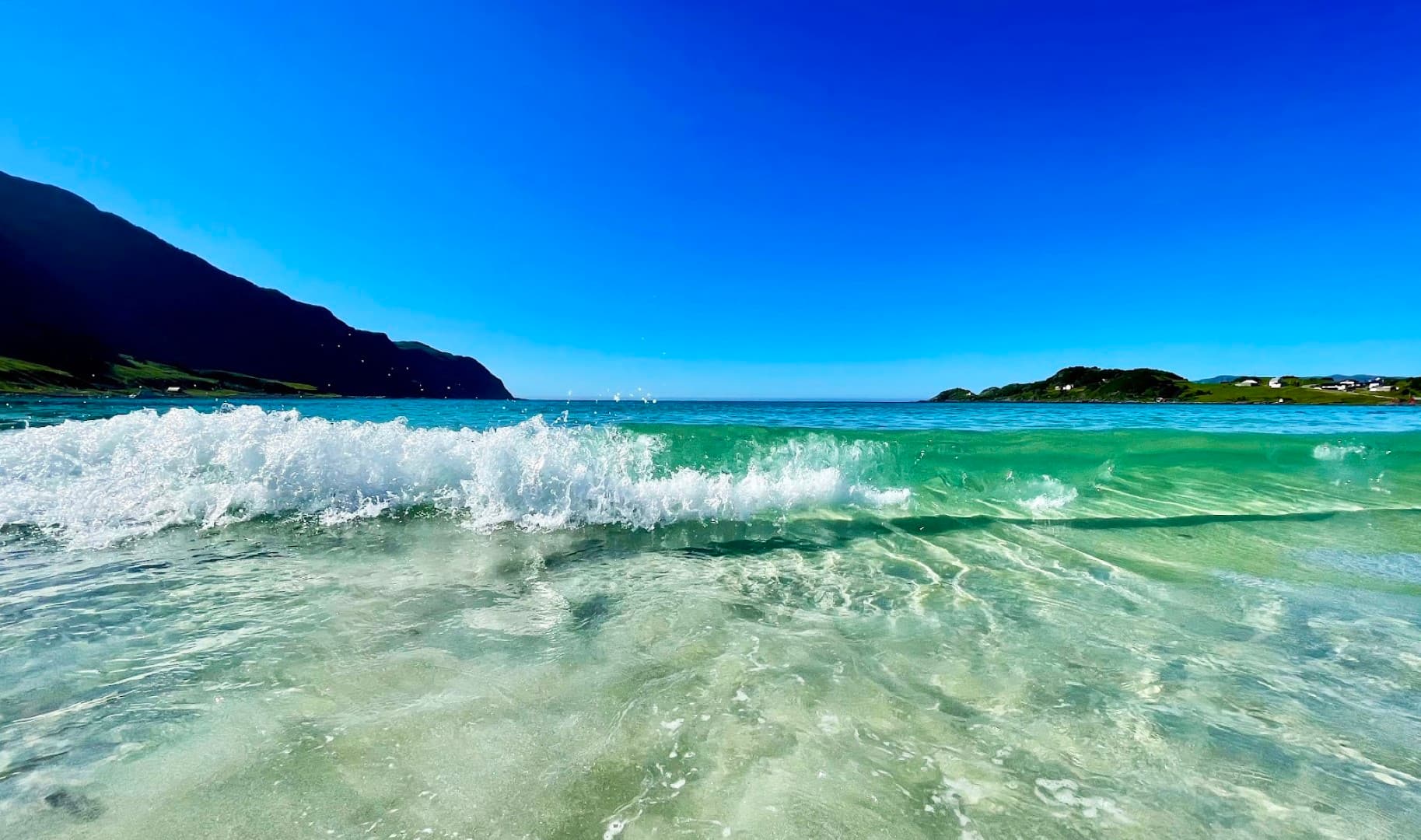
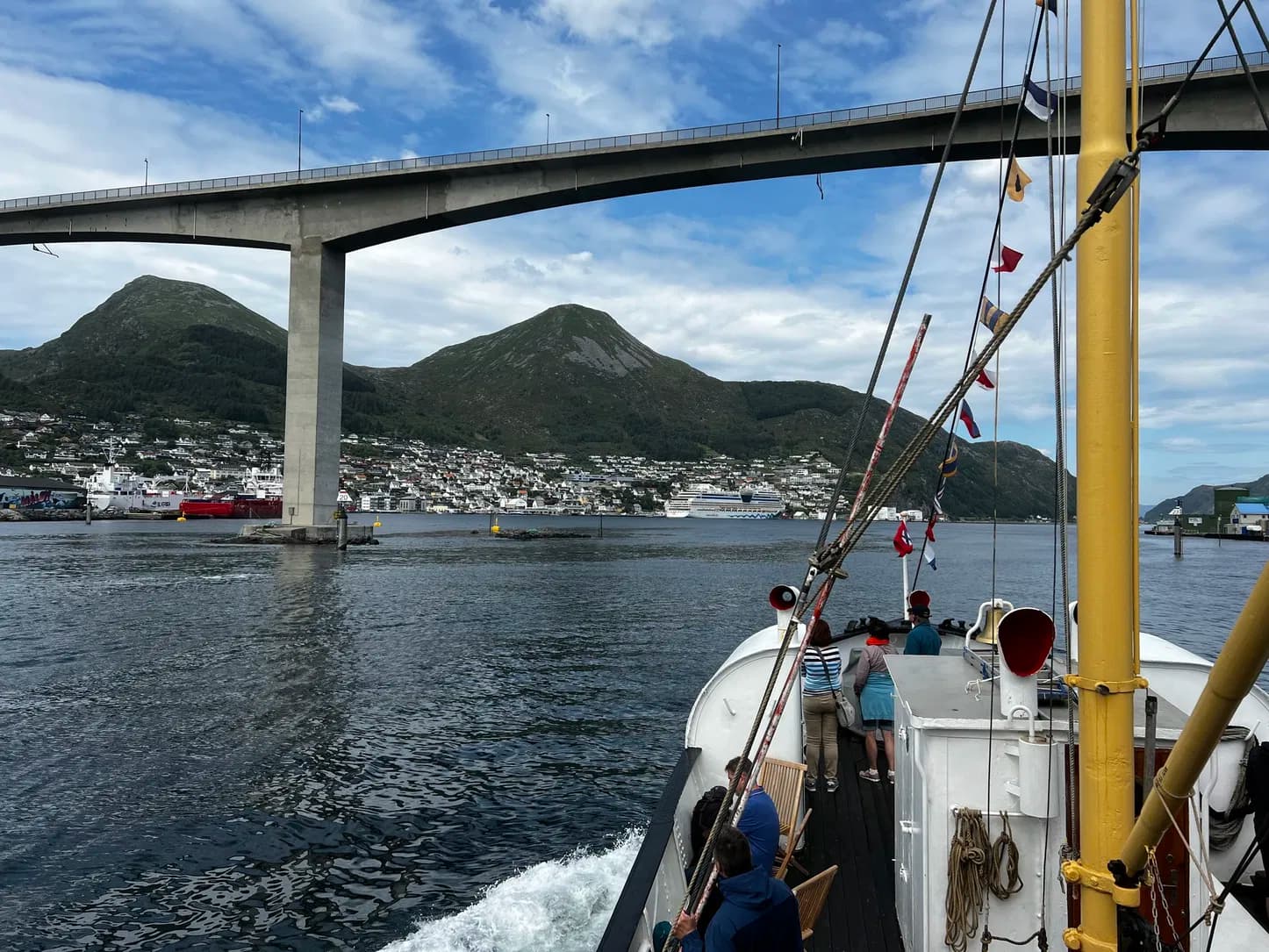
Måløy sits at the mouth of Nordfjord, on the island of Vågsøy in Vestland, western Norway, where the sheltered fjord world gives way to the open Atlantic. That meeting point is what shapes the natural wonders here: bare granite headlands, storm-carved coves, and long stretches of exposed coastline that feel far wilder than the calm inner fjords further inland. Within a compact area you move from white-sand beaches to towering cliffs and lonely lighthouses, each within reach of the town and the cruise quay. Because everything clusters around one island and its neighbours, a single day ashore can take in several very different landscapes. The Måløybrua bridge links Vågsøy to the mainland and the wider Nordfjord region, so the natural highlights are genuinely accessible rather than remote expedition territory.
Kannesteinen and Refvik beach
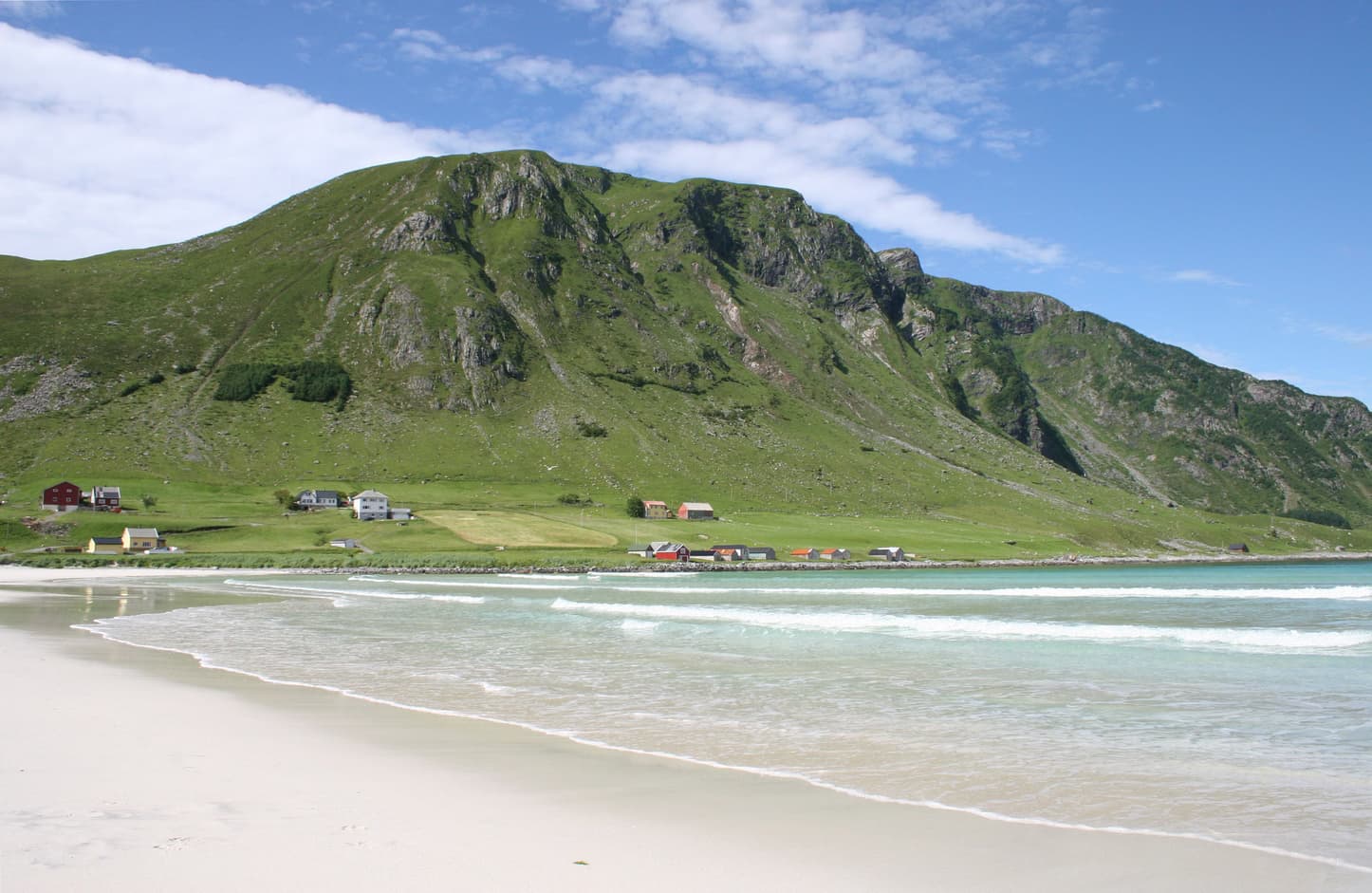
The Kannesteinen is the area's signature natural landmark: a mushroom-shaped rock rising from the sea at Oppedal, its base worn to a slender waist by thousands of years of waves. It stands just off the shore, easy to reach and photograph, and has become one of the most recognisable images of the Vågsøy coast. On the island's western side, Refvik beach (Refviksanden) offers the opposite mood, a broad sweep of pale sand facing the open sea, backed by dunes and grass. The water is bracing, but the setting, with Atlantic light and long horizons, is among the finest on this coast and a favourite for a windswept walk.
Lighthouses and Hornelen
Hendanes lighthouse marks one of the exposed edges of Vågsøy, guarding a stretch of open coast that takes the full force of the Atlantic; it rewards the visitor with dramatic weather, crashing surf and wide sea views. Inland and to the south rises Hornelen, described as Europe's highest sea cliff, its dark rock face dropping steeply toward the fjord. Seen from the water it is one of the most imposing sights in the region, steeped in old Norwegian legend, and it forms a memorable backdrop to any coastal outing around Måløy.
Experience it with us
FAQ
- What are the main natural wonders around Måløy?
- The highlights are the Kannesteinen rock, Refvik beach (Refviksanden), Hendanes lighthouse, and Hornelen, said to be Europe's highest sea cliff, all set along dramatic fjord and Atlantic coastline on and around the island of Vågsøy.
- Are these sights suitable for cruise visitors on a short stop?
- Yes. Måløy's natural attractions cluster on and near the island of Vågsøy, within an easy drive of the cruise quay, so several very different landscapes can be seen in a single day ashore.
- What is Kannesteinen?
- Kannesteinen is a distinctive mushroom-shaped rock at Oppedal on Vågsøy, its base worn thin by thousands of years of waves. It stands just off the shore, is easy to reach, and is one of the most photographed sights on the coast.
- How high is Hornelen?
- Hornelen is described as Europe's highest sea cliff, its steep dark face dropping toward the fjord. It is best appreciated from the water and is a landmark of the coastline south of Måløy.